



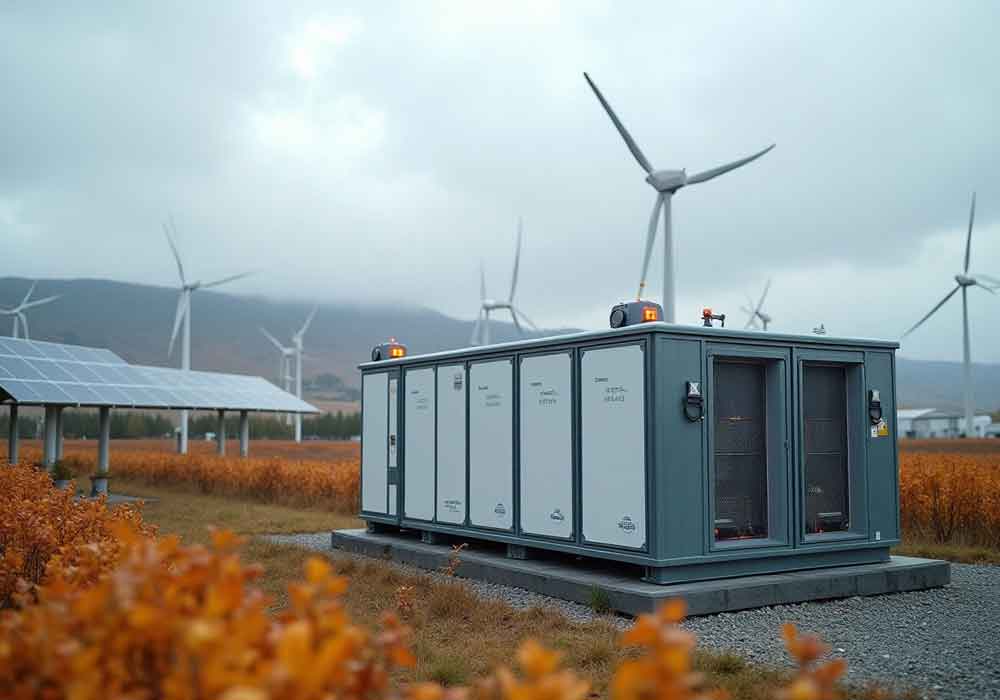
Allt eftersom vårt beroende av förnybara energikällor fortsätter att växa, det har blivit allt viktigare att hitta sätt att lagra denna energi för senare användning. Energilagringssystem spelar en avgörande roll i denna process, så att vi kan balansera tillgång och efterfrågan på energi, hantera variationen hos förnybara energikällor, and provide backup power during emergencies.
As a professional solar ess battery company, we will explore the various types of energy storage systems available today and how they work.
1. Batteries
Batteries are the most common type of energy storage system and are widely used in portable devices, electric vehicles, and stationary applications. They work by converting chemical energy into electrical energy, which can then be stored and used later. There are several types of batteries, including lead-acid, lithium-ion, and flow batteries, each with its own advantages and disadvantages.
2. Flywheels
Flywheels are mechanical energy storage systems that store kinetic energy in a rotating mass. When energy is needed, the flywheel is connected to a generator, which converts the kinetic energy into electrical energy. Flywheels are often used in applications that require high power output for short periods, such as backup power for data centers.
3. Pumped Hydro Storage
Pumped hydro storage is one of the most established and widely used energy storage technologies. It works by using excess energy to pump water from a lower reservoir to a higher one. When energy is needed, the water is released and flows through a turbine, generating electricity. Pumped hydro storage systems can store large amounts of energy and provide long-duration storage.
4. Thermal Energy Storage
Thermal energy storage systems store energy in the form of heat, which can be used later to generate electricity or provide heating and cooling. There are several types of thermal energy storage systems, including molten salt, phase change materials, and chilled water storage. These types of battery energy storage systems are often used in conjunction with solar power plants, where excess energy can be used to heat a storage medium during the day and generate electricity at night.
5. Compressed Air Energy Storage
Compressed air energy storage (CAES) systems store energy by compressing air into a storage vessel or underground cavern. When energy is needed, the compressed air is released and expanded through a turbine, generating electricity. CAES systems can provide long-duration storage and are often used in conjunction with renewable energy sources such as wind power.
6. Hydrogen Energy Storage
Hydrogen energy storage systems store energy in the form of hydrogen gas, which can be converted back into electricity using a fuel cell. Hydrogen can be produced from renewable sources such as solar and wind power and can provide long-duration storage. Dock, hydrogen storage and transportation can be challenging, and the technology is still in its early stages of development.
Battery energy storage is a versatile and reliable solution that offers several advantages. Batteries have high efficiency, fast response times, scalability, durability, low maintenance, and are environmentally friendly. They are ideal for applications that require quick and reliable power supply, and their flexibility makes them suitable for both small and large-scale energy systems. Modern battery technologies, such as lithium-ion batteries, are designed for a long lifespan and can help reduce greenhouse gas emissions by enabling the integration of more renewable energy sources into the grid, reducing the need for fossil fuel-based power plants.