




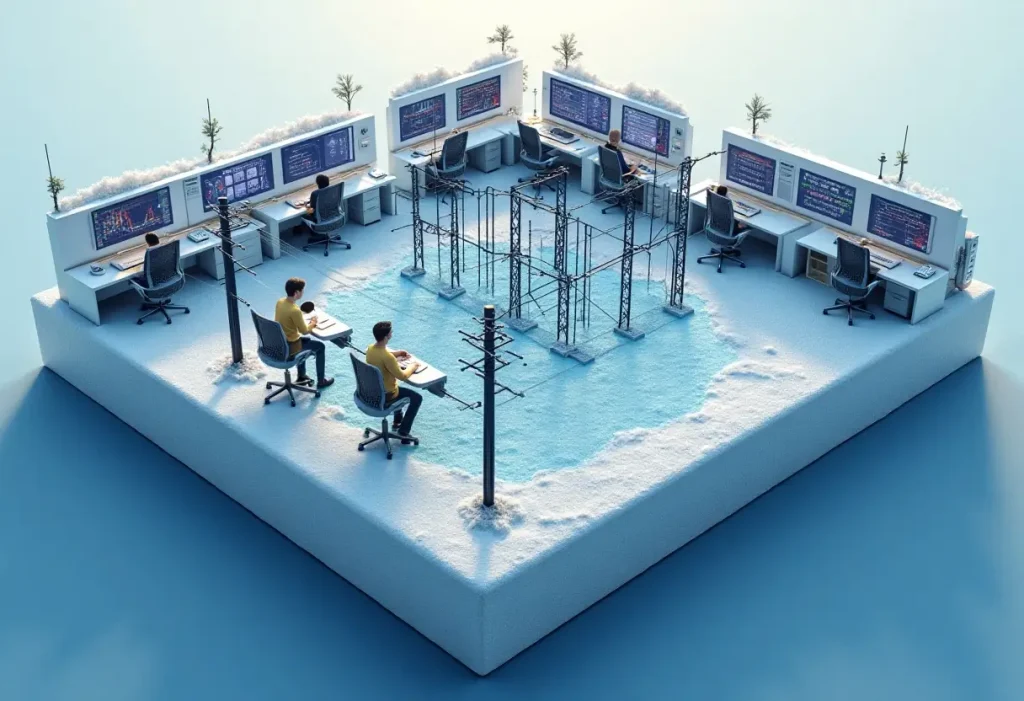
在風能和太陽能等再生能源迅速擴張的時代, 維持穩定可靠的電網變得比以往任何時候都更具挑戰性. 將網格想像成走鋼索的人, 現在的任務是在保持正軌的同時平衡不可預測的可再生能源組合. 這就是變頻控制輔助服務的地方 (飛行輔助系統) come into play, acting as the grid’s essential balancing tool to ensure it remains steady and resilient.
1. What is VPP and how is it related to FCAS?
VPP stands for Virtual Power Plant. A Virtual Power Plant is a network of decentralized, small-scale energy resources—such as solar panels, wind turbines, batteries, and demand-response systems—that are integrated and controlled through advanced software to function as a single, flexible, and efficient power plant.
VPPs, which aggregate and control distributed energy resources (DERs) like solar panels, batteries, and demand-response systems, can participate in providing FCAS. Through their aggregated resources, VPPs can respond to grid frequency deviations by adjusting their output or consumption, helping to maintain the grid’s frequency within the desired range.
2. Why FCAS is Essential?
Traditional power plants, like those using steam or hydro turbines, naturally stabilize the grid by smoothing out frequency changes. 然而, renewable energy sources like wind and solar don’t provide this stability, leading to more frequent fluctuations. To keep the grid stable, system operators are now using enhanced Frequency Control Ancillary Services (飛行輔助系統) to manage these fluctuations.
The Purpose of FCAS is to maintain the stability and reliability of the electricity grid by ensuring that the grid frequency remains within a specific range, typically around 50 Hz (或者 60 Hz in North America). FCAS achieves this by addressing imbalances between electricity supply and demand that can cause deviations in frequency. These services are crucial because even minor fluctuations can lead to significant issues, including grid instability or blackouts.
3. Types of FCAS
· Contingency FCAS:
Designed to correct the supply-demand balance in response to larger, unexpected frequency imbalances caused by events such as sudden generator outages or tripped transmission lines.
Provides varying response times to address the urgency of the event, ranging from immediate action to more gradual responses.
Batteries can respond almost instantly, either charging or discharging to help stabilize the grid, making them highly suited for providing Contingency FCAS.
Regulation FCAS:
Designed to provide continuous fine-tuning of the frequency for the grid balance.
Keeps the grid within a preferred range—the normal operating frequency band (such as between 49.85 Hz and 50.15 Hz in Australia).
4. How FCAS Works
FCAS services are activated when there is an imbalance in the grid. For example, if demand suddenly increases or a power plant fails, FCAS helps to stabilize the frequency. These services can come from:
Energy Storage System: These provide quick responses to either store excess energy or supply additional power.
By supplying or absorbing power in response to deviations from the nominal frequency and imbalances between supply and demand, the rapid response of ESS will provide a form of stability which cannot be matched by conventional network assets.
Using the Percentec system as an example:
Instruction Latency: When a Virtual Power Plant (VPP) operator issues a command, the Percentec EMS Platform receives it and deploys the control strategy within 20ms. This rapid communication is essential for ensuring timely responses.
Signal Sampling & Action Trigger: The EMS receives the control strategy in advance. The samples the grid every 50ms; if the frequency deviates beyond the set thresholds during this period, the system can adjust its operation—either charging or discharging—within 1 second or less.
Discharge Response: The system can adjust from full power to zero with a response time of 116 ms, demonstrating its capability to rapidly decrease output.
Demand Response: Consumers adjust their energy usage based on signals from the grid operator.
Traditional Generators: Conventional power plants can increase or decrease output to help balance the grid.
5. Market Mechanism:
In many electricity markets, FCAS is provided through a market-based mechanism where providers are paid for being available to provide frequency control when needed. Understanding FCAS is crucial for those involved in the energy industry, particularly as grids evolve with the integration of more renewable energy sources.
In the dynamic world of electricity grids, maintaining stability amidst the growing integration of renewable energy sources presents a complex challenge. By providing both immediate and ongoing responses to frequency disturbances, FCAS services help prevent potential disruptions and ensure a steady supply of electricity. Energy Storage Systems, like the , exemplify how modern technology can offer rapid and efficient responses, enhancing the grid’s ability to manage fluctuations and maintain stability. As we continue to integrate more renewable sources and develop advanced technologies, understanding and effectively managing FCAS will be crucial for achieving a stable, resilient, and sustainable electricity grid.